
Early childhood
Questions may arise about exploration, posture or early motor milestones. The child’s developmental history and everyday experiences help put these concerns in context.
Understanding
The body, movement, sensory processing, cognitive functions and emotions all play a part in development and daily activities.
The essentials
The body, movement, sensory processing, cognitive functions and emotions all play a part in development and daily activities. Psychomotor therapy explores how they interact to support participation and independence, taking each person's circumstances into account.
At every stage
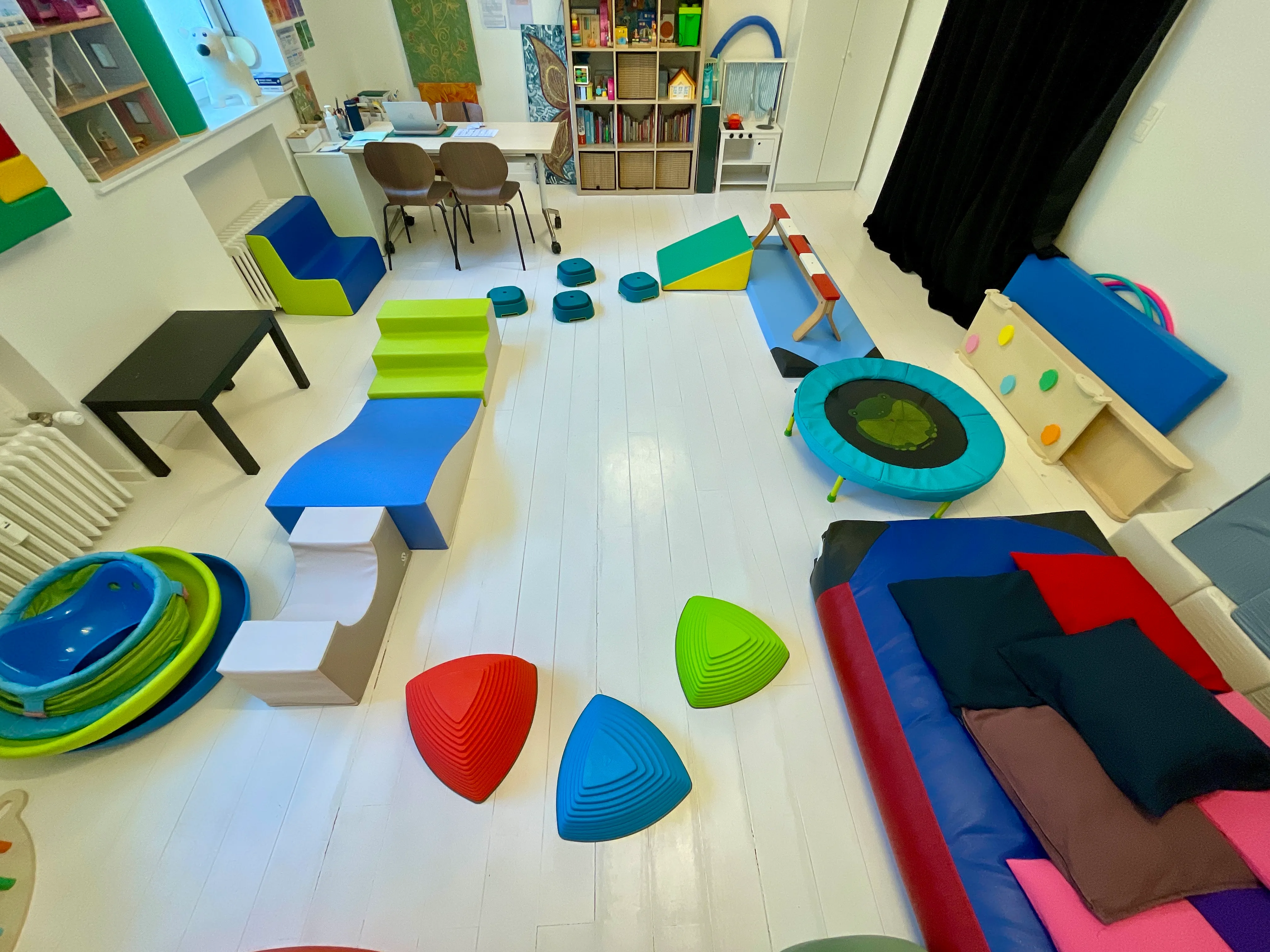
Support may be relevant for young children, older children, teenagers and adults. Difficulties can involve coordination, organising movements, fine motor skills, handwriting, emotional regulation, attention, executive functions and sensory differences. A first meeting helps determine whether psychomotor therapy is appropriate.
Questions may arise about exploration, posture or early motor milestones. The child’s developmental history and everyday experiences help put these concerns in context.
Getting dressed, handling objects, handwriting or joining games can be challenging. Assessment and observation help clarify motor, sensory or action-planning needs.
Concerns may involve independence, organising activities, handwriting or self-regulation. Goals take account of the young person’s experience and the demands of daily life.
Questions about coordination, sensory responses or planning actions are considered in relation to their everyday impact. Whether support is appropriate depends on individual needs and the help that can be offered.
Some areas
These topics illustrate the range of possible questions; they are neither diagnoses nor indications for treatment.
Observe milestones, posture, coordination and exploration in the context of a person's development.
Understand difficulties with planning and carrying out movements and how these affect everyday activities.
Support precise movements and independence in everyday hands-on tasks.
Explore comfort, posture, movement and the demands of handwriting.
Identify feelings and try out suitable self-regulation strategies.
Support organisation, planning, inhibition and adapting to different situations.
Better understand sensory responses and adapt the environment.
Support body awareness and orientation in space.
Working together
Psychomotor therapy can involve dialogue with other health, education and support professionals, with the agreement of the people concerned.